Quebec Real Estate News Today: 2026 Market Prices, Commercial Updates & Investment Outlook
Get the latest Quebec real estate market news today for 2026. Covering home prices, QPAREB market data, commercial and industrial property trends, rental market updates, and investment opportunities across Montreal, Quebec City, and regional markets.
Quebec's real estate market continues to defy the national slowdown in 2026, with home prices rising 7% year-over-year while Ontario and British Columbia face declines. From record-low inventory in Quebec City to a softening rental market in Montreal, here is the most comprehensive guide to quebec real estate news today for buyers, investors, and market watchers seeking the latest developments across residential, commercial, and industrial property sectors.
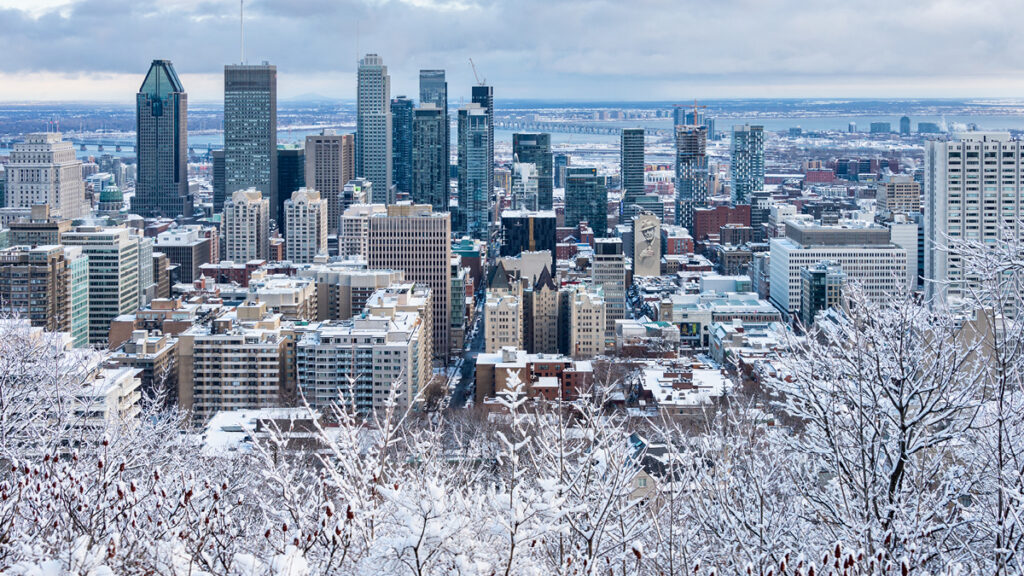
Quebec Real Estate Market News Today: Canada's Strongest Province in 2026
The quebec real estate market news today tells a story of exceptional resilience. While Canada's national average home price fell to $673,335 in late 2025, marking a 0.5% year-over-year decline, Quebec posted a benchmark price increase of 7.1% over the same period. This divergence has made Quebec the standout performer among all Canadian provinces, with the Quebec Professional Association of Real Estate Brokers (QPAREB) forecasting approximately 95,700 transactions for 2026, a modest 2% decline from the record highs of 2025 but still well above historical averages.
According to QPAREB Market Analysis Director Charles Brant, the province is not experiencing a sharp slowdown but rather entering a transition phase, with activity normalizing after reaching historical peaks. The market will remain strong compared with the historical average, supported by stable mortgage rates, a resilient service-sector economy, and a structural undersupply of housing that continues to drive price growth across most regions.
Royal LePage forecasts the aggregate home price in Quebec will reach $485,138 by the fourth quarter of 2026, representing a 7.0% annual increase. This stands in sharp contrast to the Greater Toronto Area and Greater Vancouver, where price declines of 4.5% and 3.5% are expected respectively. For investors comparing international opportunities, this resilience parallels the strength seen in Dubai's real estate market, where limited supply and strong demand continue to push valuations higher.
Quebec City Real Estate News Today: The National Price Growth Leader
Quebec city real estate news today centers on the region's extraordinary performance as Canada's top market for price appreciation. Royal LePage projects a 12% aggregate home price increase in Quebec City for 2026, making it the fastest-growing major market in the entire country for the second consecutive year. The aggregate home price is expected to reach $501,984 by the fourth quarter, with single-family homes forecast to increase by 14% to $536,598.
The QPAREB reports that the Quebec City Census Metropolitan Area faces a historic shortage of properties that continues to curb sales. Despite strong demand supported by one of the lowest unemployment rates in the country, inventory remains extremely tight across all property categories. This structural imbalance between supply and demand is the primary factor driving sustained price growth.
Quebec City's economy is largely service-based, with public administration accounting for a significant share of regional employment. Trade tariffs imposed by the United States have had little impact on the regional economy, which remains resilient. The Canada Mortgage and Housing Corporation (CMHC) expects housing starts to decrease slightly in 2026, primarily due to a construction moratorium imposed by the City of Levis on new building permits in certain areas. This measure will slow construction on the South Shore, which typically accounts for nearly a quarter of regional starts.
Montreal Real Estate News Today: Sales Slowdown Amid Shifting Market Dynamics
In January 2026, the Montreal Census Metropolitan Area recorded 2,364 residential transactions, a decline of 15% compared to January 2025. This data, released by the QPAREB in its latest quebec real estate news today 2026 report, confirms a gradual weakening of sales that began in late 2025. Despite the slowdown in transaction volume, prices continued to rise across all three major property categories.
The median price of single-family homes in the Montreal CMA reached $615,000, up 4% year-over-year in January 2026. Condominium prices increased 2% to $428,000, while plexes (multi-unit buildings with two to five units) posted the strongest gains at 8%, reaching a median price of $841,800. Plexes were the only property type to post positive sales growth in January, with 263 transactions representing a 7% increase.
Market conditions have stabilized in recent months. The average number of days on the market dropped for each property category: 50 days for single-family homes, 66 days for plexes, and 67 days for condominiums. The condominium market on the Island of Montreal shows signs of rebalancing, though conditions remain favorable to sellers in other major sectors of the Montreal CMA.
Looking ahead, Montreal's housing prices are expected to increase by 5.0% in the fourth quarter of 2026 compared to the same period in 2025, with the aggregate home price reaching $676,725. The median price of a single-family detached home is expected to rise 6.0% to $796,908, while condominiums are forecast to increase 2.5% to $502,558.
Quebec Real Estate Regulation News Today: QPAREB and Market Governance
The quebec real estate regulator news today highlights the expanding role of the Quebec Professional Association of Real Estate Brokers in market oversight and transparency. The QPAREB, which brings together more than 15,000 real estate brokers and agencies, continues to serve as the primary source of residential market statistics through its Centris provincial database.
Key regulatory and governance developments in quebec real estate broker regulator news today include the stabilization of mortgage interest rates following several consecutive cuts in 2024 and 2025. The Bank of Canada's policy rate has settled at a level well below the peaks reached in 2023, providing greater predictability for households planning real estate transactions. No new reductions in borrowing costs are expected in 2026, meaning the stimulative effect of lower rates on the market will be limited going forward.
Quebec Real Estate Law News Today: Mortgage Renewal Impacts
A significant development in quebec real estate law news today involves the wave of mortgage renewals facing Quebec homeowners in 2026. Many households who secured low-rate mortgages during the pandemic period will renew under less favorable conditions. However, QPAREB data suggests homeowners are approaching this transition with notable financial resilience, supported by significant property value appreciation in recent years and historically low mortgage delinquency rates across the province.
Quebec Real Estate Tax News Today
On the quebec real estate tax news today front, the Tribunal administratif du logement (TAL) has revised its rent increase calculation system, with recommended increases expected to be lower starting in 2026. This adjustment affects both landlords and tenants across the province and will influence investment returns for rental property owners. The revised system aims to balance tenant affordability with the economic realities faced by property owners managing rising maintenance and operating costs.
Quebec Commercial Real Estate News Today: Strategic Repositioning in 2026
The quebec commercial real estate news today reveals a market that has completed what analysts describe as a full reset. After two years of stalled transactions and wide bid-ask spreads from 2023 to 2024, the commercial sector is entering 2026 with significantly improved pricing visibility, stabilized yields, and renewed investor confidence.
Commercial real estate investment activity in Canada totaled approximately $51 billion in 2025, representing an 8% year-over-year decrease. However, food-anchored retail strips remained the most sought-after property type for the eighth consecutive quarter, followed by multi-tenant and single-tenant industrial properties. In Montreal specifically, the most positive investor momentum has been directed toward food-anchored retail strips, single-tenant industrial properties, and suburban multi-unit residential buildings.
Quebec Real Estate Development News Today: Office Sector Bifurcation
The office market in Montreal shows significant bifurcation in 2026. While overall downtown vacancy remains elevated in a tenant-leaning market, AAA buildings maintain a vacancy rate of just 8.7%, and contiguous space in high-quality buildings is in short supply. CBRE and multiple industry analysts believe the Montreal office market could rebound in 2026, driven by flight-to-quality trends as companies trade square footage for premium amenity-rich environments.
Office-to-residential conversions are accelerating, particularly in Montreal's downtown core and older suburban nodes. Free rent periods, large tenant improvement packages, and flexible lease terms remain standard for Class B and C buildings, while prime Class A properties with strong environmental credentials and transit connectivity are stabilizing.
Quebec Industrial Real Estate News Today: Logistics Corridors Driving Growth
Quebec industrial real estate news today points to continued strength in core logistics corridors around Montreal, Laval, Longueuil, and the South Shore. During the peak of the e-commerce surge, industrial vacancy dropped below 2% in several submarkets. By 2025, new construction pushed vacancy closer to the 3% to 4% range, which remains well below long-term historical averages.
Asking rents for modern industrial space in Quebec remain significantly above pre-pandemic levels, often 40% to 70% higher depending on location and specifications. Cap rates for stabilized industrial real estate quebec assets widened between 75 and 125 basis points from peak levels, primarily reflecting higher financing costs rather than fundamental weakness.
Montreal's industrial market experienced positive net absorption for the first time in two years in mid-2025. However, construction remains steady, and up to 2.2 million square feet of additional space may enter the market as adjustments continue in the logistics sector. For investors seeking industrial real estate opportunities in growing international markets, Vietnam's industrial real estate sector offers a complementary growth story driven by supply chain diversification and record foreign direct investment.
Quebec Retail Real Estate News Today: Necessity-Based Demand Holds Firm
The quebec retail real estate news today highlights the enduring strength of necessity-based retail assets. Grocery-anchored properties continue to generate the strongest investor interest across all commercial real estate categories in Quebec. This demand is supported by limited new supply and strong tenant demand in growth corridors including the South Shore, Laval, and Quebec City suburbs.
Retail repositioning strategies are emerging as a significant trend, including adding drive-through restaurants, pad sites, and residential density through zoning intensification. Some underperforming retail assets in urban markets are being converted to mixed-use developments, reflecting broader shifts in consumer behavior and municipal planning priorities.
Quebec Rental Market News Today: Supply Growth Easing Pressure
The rental market across Quebec's main metropolitan areas continues to ease as new supply enters the market and demand moderates. The CMHC expects vacancy rates to reach between 2.5% and 4.5% in the province's main markets during 2026, representing a significant improvement from the extremely tight conditions that characterized the market from 2020 to 2024.
In Montreal, rental housing continues to drive residential construction, accounting for approximately 80% of new housing units. Housing starts surpassed expectations in 2025, posting record growth. Starts are expected to remain high in 2026 before decreasing in 2027 and 2028. The marked decrease in the number of non-permanent residents has reduced growth in demand for rental housing, and the vacancy rate is expected to rise for a third consecutive year.
Rent growth will be less significant in 2026 than in 2025. The TAL's revised calculation system will produce lower recommended rent increases, and landlords are beginning to offer more competitive pricing as the supply of new units increases. However, demand for the most affordable rental units will remain strong, keeping vacancy rates low in that segment. Quebec remains structurally undersupplied in rental housing, with Greater Montreal having added over 50,000 new residents annually on average since 2021.
Housing Affordability in Quebec: Income Requirements for 2026
Fresh QPAREB data for January 2026 reveals the income thresholds required to purchase housing across Quebec's major markets. On the island of Montreal, the average house price of $770,000 requires an annual income of approximately $144,000, while a condominium at $465,000 needs a salary of about $88,600. These calculations assume a 5% mortgage rate, 25-year amortization, and housing costs representing 35% of gross income.
The Quebec City region offers significantly better affordability prospects. A house in the agglomeration costs approximately $478,500, requiring an annual income of $91,300, while a condominium at $333,500 requires only $63,500. The southern suburbs (Rive-Sud) offer the lowest threshold on the list at approximately $425,000 for a house, requiring an income of around $81,000. The affordability gap between Montreal and Quebec City represents approximately $63,000 in required annual income for comparable properties.
For international investors comparing affordability across global markets, Quebec's pricing remains competitive relative to other major metropolitan areas. Buyers interested in high-yield luxury investments may also consider exploring luxury villas for sale in Dubai, where tax-free ownership and strong rental yields offer a different investment profile.
Economic Factors Influencing Quebec Real Estate in 2026
Several macroeconomic forces continue to shape the quebec real estate market news today 2026 landscape. Real GDP growth in Quebec will remain positive but slow in 2026, sustained largely by the service sector and by federal and provincial government spending. The province's economy has proven more resilient than other Canadian regions due to limited exposure to U.S. tariffs, with most Canadian exports avoiding duties thanks to exemptions under the Canada-United States-Mexico Agreement (CUSMA).
Population growth is the key variable to watch. The slowdown in population growth that started at the end of 2024 will continue because of two main factors: the federal government's cap on international student admissions and Quebec's own reduced immigration targets. Montreal may even see a population decrease, as it has been the most affected by the net loss of non-permanent residents among Quebec's metropolitan areas.
Despite these demographic headwinds, the job market remains resilient. Quebec's unemployment rate ranks among the lowest in Canada, particularly in the Quebec City region. The public sector, service sector, and infrastructure projects continue to provide employment, and household income should continue to grow enough to sustain moderate housing demand throughout 2026. For investors monitoring other resilient real estate markets globally, Poland's real estate market shares similar characteristics of economic stability and structural housing undersupply.
Investment Outlook: Key Risks and Opportunities
The CMHC identifies several risks to the Quebec real estate forecast for 2026. Downside risks include a greater-than-expected slowdown in population growth and continued weakening of the job market due to lower-than-expected economic growth. Upside risks include stronger-than-expected pent-up demand from households that delayed home purchases in 2025 due to economic uncertainty, and population growth remaining higher than projected if new immigration targets are not reached.
For commercial real estate investors, the current period represents what analysts describe as one of the most important entry windows of the decade. Assets repriced by mathematics rather than emotion are available across multiple sectors, with industrial, multi-residential, and necessity-based retail offering the strongest risk-adjusted returns. Land values have adjusted downward by 15% to 30% in several submarkets, particularly for speculative sites, creating opportunities for long-term development investors.
Interested in Quebec Real Estate Investment Opportunities?
Connect with our network of verified local partners and receive personalized market insights for Quebec's most promising property segments. Whether you are exploring residential, commercial, or industrial real estate, our team can help you navigate the market.
Speak with a Quebec Property ExpertFrequently Asked Questions
Is Quebec real estate a good investment in 2026?
Quebec remains one of Canada's strongest real estate markets in 2026. The province is forecast to see a 7% aggregate home price increase, with Quebec City leading the nation at 12% growth. Structural undersupply, a resilient economy, and stable mortgage rates support continued demand. However, buyers should be prepared for competitive conditions, particularly in the single-family home segment where inventory remains historically low.
Why is the Quebec real estate market outperforming the rest of Canada?
Quebec's outperformance is driven by several factors: persistently low housing inventory across most regions, a service-based economy that is less vulnerable to U.S. trade tariffs, relatively more affordable home prices compared to Toronto and Vancouver, stable employment conditions with some of the lowest unemployment rates in Canada, and consumer confidence that has proven more resilient than in other provinces despite broader economic uncertainty.
What are the average home prices in Quebec for 2026?
As of late 2025, the average home price in Quebec was $551,998, up 8% year-over-year. The benchmark price stood at $529,600, representing a 7.1% annual increase. Montreal's average home price reached $674,717, while Quebec City stood at $479,130. Royal LePage forecasts the provincial aggregate home price will reach $485,138 by Q4 2026, with the Montreal region at $676,725 and Quebec City at $501,984.
How is the Quebec rental market performing in 2026?
Quebec's rental market is gradually easing after years of extreme tightness. Vacancy rates are expected to reach between 2.5% and 4.5% across major markets in 2026, up from near-record lows. Record rental housing construction is adding supply, while reduced immigration is moderating demand. Rent growth will slow compared to 2025, partly due to revised guidelines from the Tribunal administratif du logement. However, demand for affordable units remains strong, keeping vacancy rates low in lower-priced segments.
What is happening with Quebec commercial real estate in 2026?
Quebec's commercial real estate market has completed a pricing reset after the 2022-2024 interest rate cycle. Industrial space in core logistics corridors remains strong with vacancy rates of 3-4%, well below historical averages, and rents 40-70% above pre-pandemic levels. The office market is bifurcated, with premium AAA space in demand while older B/C class buildings face higher vacancy. Food-anchored retail is the most sought-after property type, while multi-residential investments remain resilient despite shifting fundamentals.
What should foreign investors know about buying property in Quebec?
Canada imposed a temporary ban on home purchases by non-Canadians through January 1, 2027, with exceptions for students, foreign workers, and permanent residents. Quebec also requires disclosure of citizenship and residency status during transactions. Foreign investors should work with licensed Quebec real estate brokers who are members of the QPAREB and can navigate provincial regulations. Commercial real estate investment is generally accessible to foreign capital, though financing conditions and tax implications should be evaluated on a case-by-case basis.
How are mortgage rates affecting the Quebec real estate market in 2026?
Mortgage rates have stabilized in 2026 after several consecutive cuts in 2024 and 2025. The Bank of Canada's policy rate is well below the peaks reached in 2023, providing predictability for buyers. However, no further rate reductions are expected in 2026, and fixed rates may rise slightly due to elevated long-term bond yields. A significant wave of mortgage renewals will affect Quebec homeowners who secured pandemic-era rates, though low delinquency rates suggest most households are financially prepared for the adjustment.