Vietnam Real Estate News Today: 2026 Market Reforms, Policy Updates & Investment Outlook
Get the latest Vietnam real estate market news today for 2026. Covering new legal reforms, digital property IDs, anti-speculation policies, infrastructure investment, and foreign investor opportunities in Vietnam's property market.
Vietnam's real estate market is entering a transformative phase in 2026, shaped by sweeping legal reforms, record infrastructure investment, and a decisive government push toward transparency. From new digital property ID systems to the pilot of a state-managed real estate exchange, here is everything investors and market watchers need to know about Vietnam real estate news today.

Vietnam Real Estate Market News Today: Key Developments Shaping 2026
The Vietnam real estate market news today reflects a sector undergoing its most significant institutional overhaul in over a decade. After weathering a sharp downturn from 2022 to 2024, the market stabilized in 2025 with GDP growth reaching 8.02%, and the government is now targeting an ambitious 10% growth for 2026. This economic momentum, combined with a comprehensive legal framework overhaul, is positioning Vietnam as one of the most attractive real estate markets in the Asia-Pacific region.
According to Savills' Asia Pacific Outlook 2026 report, Vietnam continues to be assessed as a market with strong positive prospects, underpinned by expanding domestic demand, rising incomes, and an increasingly prominent role in regional supply chains. GDP per capita has risen steadily from roughly $3,700 in 2022 to nearly $5,026 in 2025, laying a foundation for sustained real estate demand across residential, commercial, and industrial segments.
Vietnam Real Estate Policy News: Legal Reforms Driving a New Growth Cycle
The most critical story in Vietnam real estate policy news centers on the sweeping overhaul of land, housing, and real estate business laws. The National Assembly has revised key legislation including the Land Law, Housing Law, and Law on Real Estate Business, creating what officials describe as a new era of legal certainty for the property sector.

Digital Property ID System Launching March 2026
Under Decree No. 357/2025/ND-CP, Vietnam will introduce a nationwide digital identification system for all housing and real estate assets starting March 1, 2026. Every property across the country will receive a unique digital ID code that remains consistent throughout the property's lifecycle, including during transfers, leases, or mortgages. The Ministry of Construction will manage the national database, while local authorities handle data collection and synchronization at the regional level.
State-Managed Real Estate Exchange Before February 28
In one of the most significant Vietnam real estate policy news developments, the government mandated through Resolution No. 23 the pilot operation of a state-managed real estate and land use rights transaction center before February 28, 2026. This platform aims to create an official transaction channel that limits investor risk, prevents fraud, and ensures transparency throughout the entire buying and selling process. The exchange integrates technologies including artificial intelligence, blockchain, and digital identity verification.
Anti-Speculation Tax Measures
Following apartment price increases of 20%–30% in 2025, Prime Minister Pham Minh Chinh called for new tax policies to discourage speculation and ensure equal housing access for all citizens. The central bank has also signaled tighter controls over lending to risky sectors, including real estate, while aiming to slow overall credit growth in 2026. These measures reflect a broader shift from speculative investment toward genuine housing demand.
Vietnam Real Estate News Today 2026: Market Segments and Investment Outlook
For investors tracking Vietnam real estate news today 2026, the market shows clear differentiation across segments. Products with complete legal status, synchronized infrastructure, and genuine housing demand continue to attract strong interest, while speculative projects face liquidity challenges.
Residential Market: Apartments Lead Foreign Investment Flows
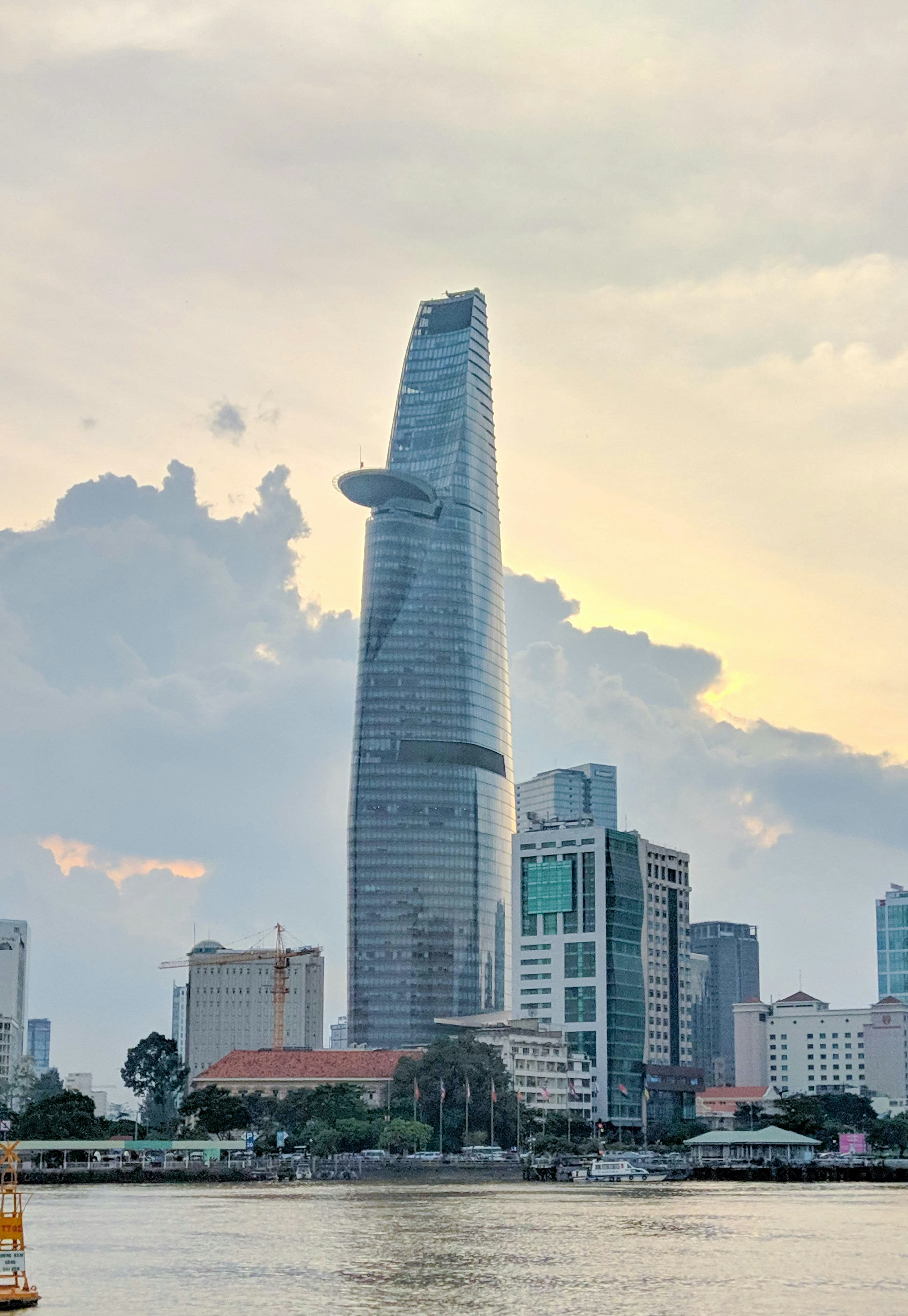
The residential segment remains the strongest performer, with apartments leading investment flows from both domestic buyers and overseas Vietnamese. According to Savills, flexible payment mechanisms make apartments particularly attractive, as they are typically sold off-plan with payments staggered across construction phases. Overseas Vietnamese remittances to Ho Chi Minh City alone reached more than $10.34 billion in 2025, up 8.3% year-on-year, with a significant portion directed toward property investment.
Vinhomes, one of Vietnam's largest developers, reported record pre-sales of new-build homes in 2025, with rising prices and improving margins. The company was targeting 27% revenue growth and 20% profit growth, supported by an extensive residential landbank exceeding 17,000 hectares.
Social Housing: A Government Priority
Social housing has emerged as a key policy priority and market stabilizer. More than 102,000 social housing units were completed nationwide in 2025, exceeding annual targets and bringing the national program for one million affordable homes to approximately 62% completion. Authorities plan to add another 158,000 units in 2026 through Resolution No. 201/2025/QH15, which pilots special mechanisms for social housing development.
Commercial and Office Space
Demand for Grade A office space remains positive, particularly as multinational corporations expand their presence in Vietnam to access skilled labor at competitive costs. Savills notes that the "China plus one" strategy continues to drive industrial and logistics real estate demand, with rents in most major markets expected to maintain an upward trend in 2026.
Industrial Real Estate and Logistics
With total registered foreign direct investment reaching approximately $38–40 billion in 2025 and disbursed capital hitting a record high, industrial real estate continues to benefit from Vietnam's growing role in global supply chains. European capital is becoming more selective, focusing on technology, electronics, deep processing, and logistics sectors. The EU–Vietnam Free Trade Agreement, which aims to eliminate import tariffs on over 99% of export lines to the EU by 2027, further strengthens Vietnam's appeal to long-term industrial investors.
Infrastructure Driving Long-Term Real Estate Growth
Large-scale public investment in infrastructure stands as the most important growth driver for Vietnam's real estate market over the next decade. A ceremony in December 2025 celebrated the launch of 148 new infrastructure projects and the inauguration of 86 more, collectively worth $129 billion.
Major Projects Reshaping the Market
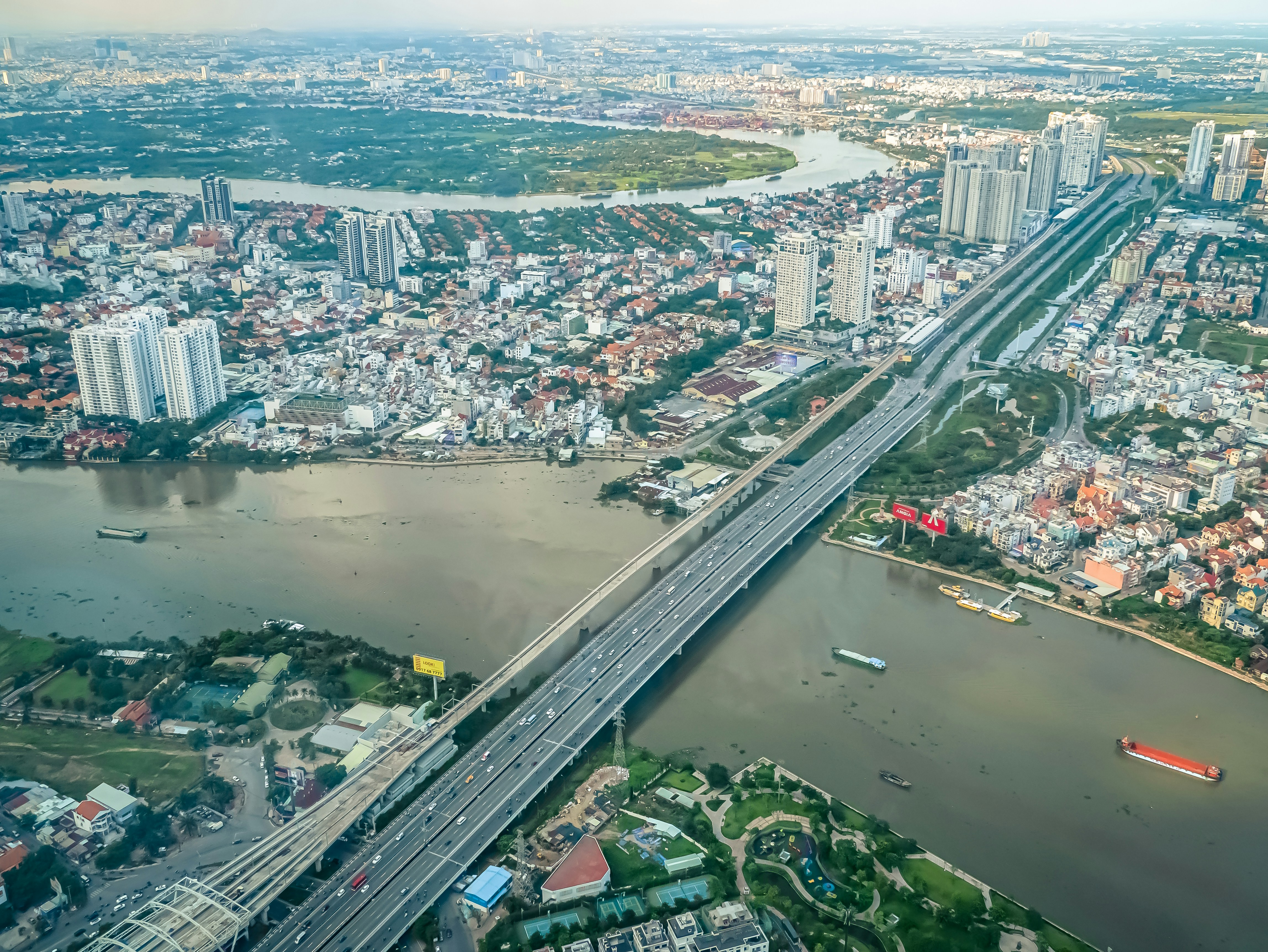
Key infrastructure developments creating new real estate growth corridors include the North–South Expressway expansion, Long Thanh International Airport (scheduled to open in 2026 with capacity for 100 million passengers annually), ring road systems around Hanoi and Ho Chi Minh City, the 400km Lao Cai–Hanoi–Hai Phong railway, three new metro lines, and a new Olympic park in Hanoi. As these transport and logistics networks near completion, satellite cities and secondary urban centers are expected to emerge as new development hubs.
Tourism Fueling Hospitality Real Estate
Vietnam's tourism sector recorded 20% growth in visitor numbers over 2025, reaching a record 21.2 million international arrivals. This tourism boom is driving demand for hospitality real estate, with Fairmont Hotels & Resorts recently making its debut in Vietnam and the Saigon Centre earning LEED Platinum and Gold sustainability certifications.
Foreign Investor Guide: Ownership Rules and Market Entry
For foreign investors following Vietnam real estate news today, understanding the ownership framework is essential. Foreigners cannot own land outright but may acquire property through a leasehold structure with terms up to 50 years, extendable with government approval. Ownership is capped at 30% of units in a condominium building and 250 landed houses within one administrative area.
New provisions in the 2024 Land Law and the amended Law on Real Estate Business have expanded opportunities for overseas Vietnamese, granting them property transaction rights equivalent to those of Vietnamese citizens. Companies with up to 50% foreign ownership are now treated as domestic investors for land-related rights, simplifying land acquisition, transfer, and mortgage processes.
Decree 226/2025 has removed fixed land price brackets in favor of market-based valuations, with annual land lease rents reviewed every five years. These reforms aim to increase transparency and reduce regulatory uncertainty for both domestic and international investors.
Financial Market Context: Interest Rates and Credit
Vietnam's official interest rate has remained at 4.5% since June 2023, though lending rates ticked up by approximately 100 basis points toward the end of 2025. Credit growth was strong at 19% year-on-year in 2025, and total outstanding bank lending reached a record VND 4 quadrillion, with approximately VND 1.8 quadrillion directed to real estate activities.
The government is running a budget surplus, and real estate investment trusts (REITs) are emerging as a natural instrument to finance commercial real estate and attract foreign capital. Vietnam is entering what analysts describe as a rare window of opportunity, marked by moderate interest rates, strong stimulus policies, and far-reaching capital market reforms.
Key Risks and Challenges in 2026
While the outlook remains largely positive, the Vietnam Association of Realtors (VARS) has identified four key risks for the market in 2026. These include higher land costs from newly issued land price frameworks, rising borrowing rates that may squeeze short-term investors, persistent legal bottlenecks at the local implementation level, and a housing supply still skewed toward higher-end segments rather than affordable housing.
The real estate sector currently has approximately 2,991 projects facing difficulties, with more than 80% affected by legal and procedural issues. The total capital tied up in these stalled projects is estimated at VND 2.4 quadrillion ($95 billion). Authorities have cleared 926 projects so far, representing about 31% of the total, with the remainder classified by jurisdiction for resolution.
FTSE Russell Emerging Market Upgrade
Vietnam received an upgrade to emerging market status from FTSE Russell in 2025, with the change subject to an interim review in March 2026 and expected to take effect in September. This upgrade could attract significant passive investment flows, as Vietnam currently accounts for over 30% of the MSCI frontier markets index with daily trading turnover averaging more than $1 billion. Reports also indicate that Vanguard is exploring launching dedicated Vietnam investment funds.
Comparing Vietnam with Other Asian Real Estate Markets
Vietnam's property market offers distinct advantages compared to regional peers. With a forecast portfolio P/E of just 9.5x at end-2025 and projected earnings growth of 18%, the Vietnamese market remains attractively valued relative to more mature Asian markets. The country's GDP per capita target of $8,500 by 2030, up approximately 80% from 2025 levels, suggests substantial room for middle-class expansion and corresponding real estate demand growth.
For investors comparing opportunities across Asia, Vietnam's combination of strong economic growth, improving legal frameworks, competitive labor costs, and strategic positioning within global supply chains creates a compelling long-term investment case. Markets seeking similar diversification opportunities may also consider developments in Dubai's luxury villa market or review the broader Dubai real estate outlook for 2025 as complementary investment destinations.
Interested in Vietnam Real Estate Investment Opportunities?
Connect with our network of verified local partners and receive personalized market insights for Vietnam's most promising property segments. Whether you are exploring residential, commercial, or industrial real estate, our team can help you navigate the market.
Speak with a Vietnam Property ExpertFrequently Asked Questions
Can foreigners buy property in Vietnam?
Yes, foreign nationals can purchase property through a leasehold structure for up to 50 years, with potential extensions. Ownership is limited to 30% of units in condominiums and 250 landed houses per administrative area. Properties must be in projects approved for foreign ownership.
What is the new digital property ID system in Vietnam?
Starting March 1, 2026, under Decree 357/2025, every property in Vietnam will receive a unique digital identification code within a national database. This code tracks the property throughout its lifecycle, enhancing transparency and streamlining administrative processes for transactions, leases, and mortgages.
Is Vietnam real estate a good investment in 2026?
Vietnam's real estate market is entering a new growth cycle supported by 8% GDP growth in 2025, comprehensive legal reforms, $129 billion in infrastructure projects, and strong foreign investment inflows. However, investors should focus on properties with clear legal status and genuine demand rather than speculative opportunities, as the government is actively curbing speculation.
What are the biggest risks in Vietnam real estate in 2026?
Key risks include rising land costs from new pricing frameworks, higher borrowing rates, slow implementation of revised laws at the local level, and a supply imbalance favoring higher-end housing. Approximately 2,991 real estate projects remain stalled due to legal and procedural issues.
How is Vietnam's FTSE emerging market upgrade affecting real estate?
Vietnam's upgrade to emerging market status by FTSE Russell, expected to take full effect in September 2026, is anticipated to attract significant passive investment flows into the country. This broader capital market development is expected to have positive spillover effects on the real estate sector through increased foreign investment and improved market liquidity.
What are the best property segments to invest in Vietnam in 2026?
Analysts highlight apartments in major cities as the most accessible segment for foreign investors, with strong rental demand and flexible payment structures. Industrial and logistics real estate continues to benefit from FDI inflows and supply chain diversification. Social housing development also presents opportunities given strong government backing and unmet demand.